Look at this serene lakeside retreat by Disbrow Iannuzzi that not only looks stunning but feels deeply human—rooted in nature, storytelling, and the timeless beauty of wood. It’s also a masterclass in how wood and biophilia can be woven together:
-
Warm, tactile ash interiors imbue every room with comfort and calm.
-
Expansive glass and timber framing form direct connections to the landscape.
-
The dialogue between dark slate and soft wood captures light and mood—across seasons and times of day.
Here are 4 key take-a-ways to embrace biophilia into your next home.
1. Think Nature-First Design
-
Biophilic foundation: Architect Disbrow Iannuzzi created a Y-shaped home that deeply integrates with its leafy Detroit‑area site. The design blurs indoor/outdoor boundaries, celebrating natural light, vegetation, and framed landscape views—an embodiment of biophilia
-
Framing views like art: Floor-to-ceiling glass walls and timber-framed openings echo Japanese woodblock prints, turning trees, water, and sky into living art pieces inside the home

2. Put Wood at the Heart of the Home
-
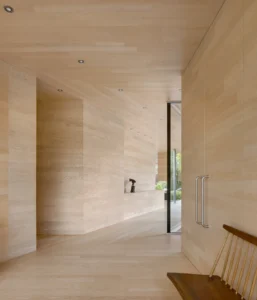
White ash warmth: The interior is wrapped entirely in white ash—on walls, ceilings, and floors—bringing cozy, Scandinavian-inspired minimalism. It’s a tactile, natural counterpoint to the soulful exterior
-
Craft heritage: The owner’s background in the lumber industry inspired a material choice rooted in craftsmanship and respect for wood, reinforcing biophilia through authentic, story-rich materials




3. Contrast Materials like a Forest Might
-
Slate meets wood: A monolithic black slate exterior cloaks the structure, sourced from a single quarry to unify roof, walls, and driveway. As light shifts, the slate reveals subtle textures and a cinematic presence
-
Wood’s responsive touch: In contrast, the ash interior absorbs and radiates warmth, responding to changing light throughout the day—enhancing the home’s dynamic, living quality

4. Design to Emphasis Experience
-
Glass corridor: A central glass hallway frames the courtyard with its graceful crabapple tree, drawing views through the home. At night, the ash glows under soft illumination, creating an immersive, restorative path
-
Sensory immersion: The combination of tactile ash, visual connectivity to nature, and shifting light creates a richly sensory experience—key principles in biophilic design.

Why Wood + Biophilia Matter
-
Emotional well‑being: Wood fosters warmth, calm, and psychological comfort—core to human connection with nature.
-
Environmental care: Using local, durable materials like ash supports sustainability and reduces carbon impact, aligning eco‑friendly building with biophilic intent.
-
Mindful rhythm: Natural materials and light transitions anchor daily life in the rhythms of the natural world, strengthening our link to place and environment.
All Images by: Rafael Gamo
Original Source: www.wallpaper.com/architecture/residential/lakeside-house-michigan-usa