Most regions are told they have to pick: a forest economy or a forest. The Northeast has spent 150 years proving that’s a false choice. Let’s look at it, with receipts.
The money
Take Maine. Its forest products industry contributed $8.3 billion to the state’s economy and employed 29,000 people in 2024, roughly $1 of every $29 in state GDP (Mainebiz). Those jobs sit where few others do. In Aroostook County, forest products accounted for 16% of all employment in 2019 (Spectrum News, citing the UMaine Margaret Chase Smith Policy Center).
The mix is also tilting toward lumber. From 2019 to 2024, Maine’s paper sales fell 41% while wood product manufacturing sales rose 45%, backed by more than $1.5 billion in new investment across the sector (Mainebiz).
The forest
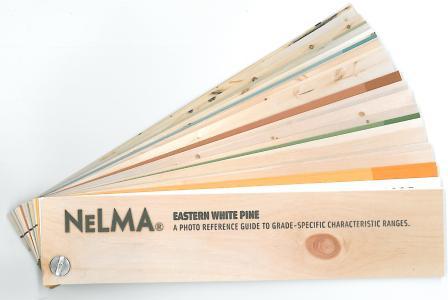
By the mid-1800s, farming and logging had left much of New England with only 30 to 40% of its land in trees (NELMA). Today the region is about 80% forested (Society for the Protection of New Hampshire Forests).
Maine, nearly 90% forested, has grown more wood than it harvested over the past decade. Its ten-year growth-to-removal ratio reached 1.55 in 2023: for every 100 cubic feet cut, 155 grew back (Maine Development Foundation, Measures of Growth). Eastern white pine is one of the species showing the largest surplus (Seymour, “Growth and Harvest in Maine’s Forest: 2000–2025 Dynamics,” Maine Woodlands, 2025).
The model
The trees aren’t the transferable part. The arrangement is.
- Private land, open doors. Roughly 94% of Maine’s forest land is privately owned, and landowners voluntarily open more than 10 million acres to the public for hunting, fishing, and other recreation (Maine Department of Inland Fisheries and Wildlife).
- Easements that keep forests working. Conservation easements in Maine bar development but keep timber in production. The 2001 Pingree easement protects 762,192 acres, the largest forestland conservation easement in U.S. history (New England Forestry Foundation). The Forest Society of Maine has conserved more than a million acres this way (Down East), and the federal Forest Legacy Program has added 750,000 acres in Maine (USDA Forest Service).
Neither idea is exotic. Together, they turn a forest into an asset owners have every reason to keep growing.
What it means for the people who build with it
A board of eastern white pine or SPFs carries that whole system with it: wood from a forest larger than it was 150 years ago, cut by a workforce that keeps rural towns running. Specifying it is how the arrangement keeps paying for itself, for the next generation of owners and the one after that.