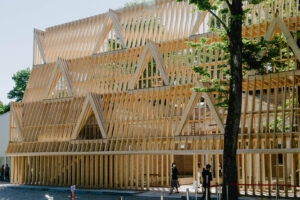
Walk through any architecture publication right now and wood construction means one thing: mass timber. Cross-laminated panels, exposed glulam beams, landmark buildings photographed at golden hour. It’s a compelling story, and the engineering behind it is real.
But it’s not how most wood buildings get built.
Light-frame construction is still the workhorse of the American building industry. Schools, multi-family housing, medical clinics, community centers — the structures that define how people actually live, learn, and work are framed in dimensional lumber, not CLT panels. Light-frame is faster, more flexible, and accessible to the full range of contractors and builders who make up the construction market. It doesn’t require specialized fabricators or extended lead times. It works.
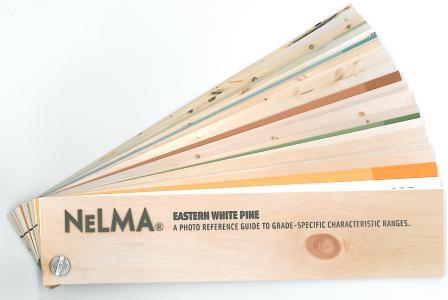
Northeastern softwoods are what light-frame runs on. NELMA-certified SPFs — the designation covering spruce, fir, and pine harvested from northeastern forests — bring documented design values, consistent grading, and a supply chain that connects regional mills directly to job sites across the Northeast and beyond. Eastern white pine anchors finish and millwork applications in the same buildings where SPFs carry the structural load.
Mass timber deserves its moment. But the next school, the next apartment building, the next community center going up in your region will almost certainly be framed in light-frame lumber — certified, graded, and sourced from mills that have been doing this work for generations.