Trend Watch: Sustainable Wood A Hot New Material for Eyewear

Sustainable Wood Glasses main

Eco-friendly wood is now a stylish option for both prescription eyeglasses and sunglasses, available in a variety of species and finishes from brands like GROWN, Proof, Drift and Siempre Verde. Unlike plastic frames, wood won’t keep your skin in constant contact with potentially harmful substances like bisphenol-A (BPA). Natural and renewable, wood frames can be designed to show off the material or resemble more conventional eyewear. This trend represents just one more example of wood showing up in places you wouldn’t expect, like luxury cars and as a main material for skyscrapers.

GROWN

GROWN (pictured above) is a sustainable wooden eyewear brand that funds sight-restoring surgery for one individual, or twelve eye exams for children, for every pair of shades purchased. All GROWN sunglasses are handcrafted from durable bamboo and hardwoods, free of harmful substances.

Proof Sunglasses
Sustainable Wood Eyewear Proof

Proof offers both sunglasses and prescription glasses in a wide range of colors and styles, with frames made from wood, stainless steel, and other eco-friendly materials like plant-based acetate. All eyewear in the Eco Collection is 100% renewable, biodegradable and hypoallergenic, and come in a custom wood case with a microfiber pouch.

Hardwood Frames by Drift Eyewear
Sustainable Wood Eyewear Drift

Drift eyewear’s Timber Collection is crafted from salvaged hardwood from places like a renovated building in New York City’s Meatpacking District. The frames are carefully designed to have optimal weight distribution on all points that touch the face for the highest comfort level possible.

Prescription Glasses in Wood Frames by Siempre Verde
Sustainable Wood Glasses Siempre Verde

Siempre Verde sells upscale, handcrafted prescription wood eyewear – including the lenses – with home delivery. That  means you don’t have to buy the frames and take them to a local optometrist; you just send in your custom prescription and your eco-friendly wooden eyeglasses will be made just for you.

Trend Watch: Woodworking Jobs Boom, Learning Centers Pop Up

EWP Wood Learning Center Main

A beautiful new wood construction center at Seattle Central Community College has been built in response to an uptick in woodworking jobs, giving area residents a modern space in which to learn old-world craftsmanship. Many trades took a hit during the recession, but recent projections show that demand for wood products is experiencing a slow but steady increase. That includes new housing construction and remodeling.

EWP Wood Learning Center 3

“Residential construction will drive much of that growth, with pent-up demand for housing, moderately rising home prices, and growing consumer confidence having the most influence,” says Craig Adair, market research director of APA, the Engineered Wood Association.

EWP Wood Learning Center 2

Many of the woodworkers taking advantage of the new Seattle facility are new to the craft, coming to it from professions ranging from fishermen to physicians. At the workshop, students learn basic woodworking skills while working on community projects, like turning lumber from trees cut in a local park into picnic benches for that same park.

EWP Wood Learning Center 4

In addition to cabinetry and carpentry, the center teaches boat building. The center recently acquired a 28-foot cruiser built on Lake Union in the 1920s. The boat, which is no longer seaworthy, will be rebuilt again and again over the coming years as students learn to make repairs, restore rotted areas, and remodel the interior.

Woodworking learning centers aren’t limited to college campuses. Small, private schools like the Center for Furniture Craftsmanship in Maine also teach traditional skills, with hands-on, in-depth training. Community woodworking shops are another new trend, offering shared equipment for a fee.

Photos: Seattle Central Community College

Trend Watch: Wood Makes Waves in Modern Architecture

EWP Modern Wood Architecture Feature

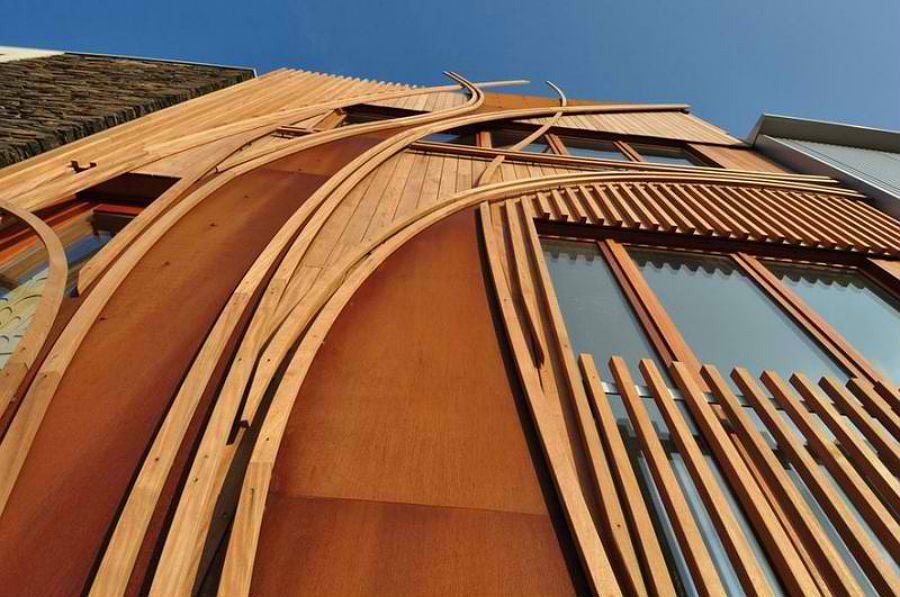
Scroll through major architecture and design blogs like ArchDaily, Dezeen and Design Boom and you’ll notice a common theme among many new modern structures: warm wood facades. The coldness of steel and concrete, which was the design standard for decades, is giving way to the welcoming character of all varieties of wood, including Eastern White Pine. Not only is this an aesthetic choice that can make everything from private residences to massive museums and skyscrapers feel less cold and imposing, it can also be a greener option.

Wood that has been grown and harvested sustainably can be integrated into modern architecture in the form of exterior and interior siding, as it has been used in more conventional structures for centuries. It can also create beautifully curved, undulating shapes. The hottest trend that’s producing some of the most dazzling buildings ever seen is wood facades, wherein screens of wood are placed outside steel and glass exterior walls to provide shade and privacy. These facades can significantly lower a building’s energy consumption, and add tons of visual interest. Check out a gallery of some notable projects below.

Al Bahar Towers

EWP Modern Wood Architecture Al Bahar 1

EWP Modern Wood Architecture Al Bahar 2

Cloud House

EWP Modern Wood Architecture Cloud House

Carabanchel Housing

EWP Modern Wood Architecture Carabanchel

National Assembly for Wales

EWP Modern Wood Architecture National Assembly Wales

YTL Residence

EWP Modern Wood Architecture YTL

Letterbox House

EWP Modern Wood Architecture Letterbox

Hotel Liesma

EWP Modern Wood Architecture Hotel Liesma

Urban Housing in Nieuw Leiden

EWP Modern Wood Architecture Niuew Leiden

Trend Watch: Timber Frame Buildings Set to Boom

EWP Timber Frame example

The rustic look of timber frame is making a big comeback, with a new report forecasting a 60% increase in sales volume and an 80% increase in value. Timber frame architecture uses heavy, rough-hewn timbers rather than dimensional lumber as both a structural and aesthetic frame of a building. Commonplace in wooden buildings of the 19th century and earlier, timber framing brings the natural look of whole trees into interior spaces.

The biggest growth in timber frame sales is expected to come in the residential sector, but demand is expanding in other types of buildings as well. Timber is recognized as the least carbon-intensive building material, making it an ideal choice for structures that strive for sustainable certification. The report, by MTW Research, is based on financial data from 80% of the timber frame industry.

Eastern White Pine is a common material used for timber frame construction, both for the timbers themselves and for complementary planks and siding. See a beautiful example of this look at a lakeside North Carolina residence. Timber frames are also common in traditional English architecture, as seen above. It’s set off beautifully by plaster, natural building materials like cob, and drywall for a crisper, more modern effect.

Take a tour of a timber frame home made of Eastern White Pine in this video.

Photo: ell brown