Eco Timber Frames: Beautiful Eastern White Pine Cabins

Eastern White Pine Timber Frame 1

Eastern White Pine is a popular choice for timber frame construction thanks to its strength, light weight, ease of use and affordability. But it also results in some incredibly beautiful structures showing off the incomparable craftsmanship of old world woodworking techniques. A company called Eco Timber Frames, based in Saluda, North Carolina, shows off a portfolio of prime examples on its website.

Eastern White Pine Timber Frame 22

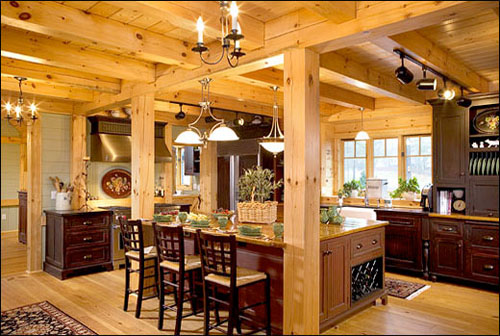
Eco Timber Frames creates artistic timber frame homes using post and beam construction, crafting the frame from solid timbers connected by mortise and tenon joints and secured with oak pegs. The company chooses Eastern White Pine selected from slower growing New England Forests because it’s “easy to work, structurally stable and has remarkable aesthetic character.”

Eastern White Pine TImber Frame 3

That character shines through in the remarkable homes that the company has designed. Customers can choose the floor plans and frame style they prefer, and add their own custom details as desired. Notable features include front porches that extend the characteristic timber frame of the home past its walls so it becomes a major highlight of the exterior, as well.
Architectural Monographs: A Pre-Revolutionary Annapolis House

EWP Monographs Annapolis 1

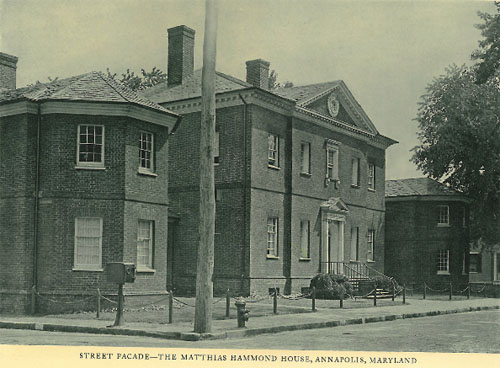
There’s no place in America that offered a more English lifestyle before the Revolutionary War than Annapolis, Maryland, which at the time was fully of wealthy, aristocratic people enjoying the fruits of pioneer labor. As such, it has some of the most English architecture of that time period, with one building standing out in particular: the Matthias Hammond house, which is the focus of this issue of the historic White Pine Series of Architectural Monographs.

EWP Monographs Annapolis 2

Built in 1770, the Hammond House was designed by Philadelphia architect Matthew Buckland and “stands today as one of the finest, if not the finest, example of the work of the Colonial Period.” In the 1920s, when this issue was written, it was purchased by St. Johns College and turned into a colonial museum, with all of the furnishings restored.

EWP Monographs Annapolis 4

This monograph presents photographs and information about the house as it was nearly a century ago, and today it’s almost exactly the same thanks to these preservation efforts. Visitors can still enjoy stepping through its doorway and into the past. Now known as the Hammond-Harwood House, it’s been called the “Jewel of Annapolis,” and it’s a popular tourist destination in the city.

Read more at the White Pine Monograph Library.

34-Story Wooden Skyscraper Planned for Stockholm

Wooden Skyscraper Sweden 1

The wooden skyscraper revolution continues as more architects get back to basics, even for structures that reach into the clouds. Sweden’s Berg | C.F. Moller’s proposed design for HSB Stockholm’s architectural competition 2023 envisions a future in which our tallest residential buildings are made of wood. The firm’s 34-story design would be all-wood construction over a concrete core, with both social and environmental sustainability at the forefront of the project.

The architects chose wood because its production has no waste products and binds CO2. It’s low weight but very strong, and more fire resistant than both steel and concrete due to the fact that 15% of its mass is water. The beams and pillars of the skyscraper are made of solid wood, and each apartment is lined in it for a warm, homey feel.

Wooden Skyscraper Sweden 2

The skyscraper has a stepped design at the top, allowing for private rooftop gardens complete with full-sized trees. The lower apartments have glass-covered verandas, and the whole building is powered by rooftop solar panels.  It’ll not only provide eco-friendly residences, but act as a landmark for the city.

Wooden Skyscraper Sweden 3

This is just one more example of innovative visions for super-tall wooden structures coming out of the architecture world in recent months. The architecture firm that designed the Willis Tower (formerly Sears Tower) of Chicago plans a 42-story wooden skyscraper, the tallest of its kind, and architect Michael Green has designed a concept for a 30-story tower in Vancouver.

Architectural Monographs: Inspiration from Northern Virginia

EWP Monographs Northern Virginia 1

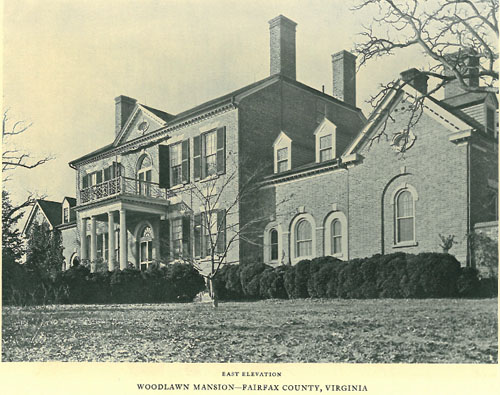
Concerned that twelve years and one hundred thousand miles of touring America looking for exemplary houses had exhausted the supply, the editor and writer of the White Pine Monograph Series were surprised to find that the country has even more beautiful Colonial-era architecture than they had imagined. But some of it is hidden away, designed by no-name architects or otherwise obscured from public awareness.

EWP Monographs Northern Virginia 2

“One never ceases to wonder at the quantity of good work done by the early builders of this country; the consistency with which they erected houses, churches, public buildings, that have stood the test of time and through changing conditions of living and public taste have survived to be admired and appreciated by those who study them.”

EWP Monographs Northern Virginia 3

In 1931, their travels took them on the road between Washington, D.C. and Fredericksburg, Virginia. In this issue of the Monographs, they detail some of the most elegant and admirable structures they found in Northern Virginia.

EWP Monographs Northern Virginia 4

“Virginia, perhaps with greater claim than any of the early Commonwealths, can be numbered among the first family of Colonies. Its history, full of romantic episodes and famous names, is written large upon the pages of Early America. The contributions of this colony to the outstanding architectural examples of the Colonial period are as numerous and significant as any of the original thirteen.”

Read the whole issue at the White Pine Monograph Library.

Architectural Monographs: Old Charleston, Photographed in the 1920s

Old Charleston 1

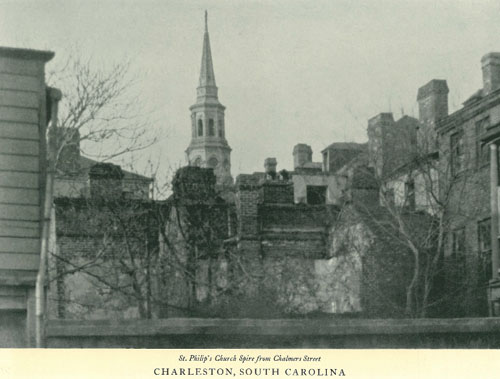
The charm of Old Charleston speaks for itself, especially in these 1920s black-and-white photographs captured for Volume XIV, Issue II of the White Pine Series of Architectural Monographs. This issue consists almost entirely of photos of some of this South Carolina coastal city’s oldest and most picturesque buildings, from brick storefronts and stately manors to spire-topped churches.

Old Charleston 2

A mixture of English and French building typologies influenced by the San Dominican and West Indian settlers led to a charming and entirely unique mixture of architecture, often built using exotic materials like oyster shell lime stucco. While a lot of the city’s historical buildings were destroyed between two wars and a devastating earthquake in 1886, many still stand.

Old Charleston 3

“It has seemed to us that the buildings cannot be studied properly apart from their surroundings,” write the authors of this monograph. “To look comprehendingly up at church spires and splendid town houses, one must also look beyond them at the city and the people and the times that created them. To appreciate old Charleston at its fullest value it is necessary to see, not only the architectural monuments, but also their settings, and to catch the spirit and atmosphere of the place.”

Old Charleston 4

Read more at the White Pine Monograph Library.

This Week in Wood: Earthquake Resistant Wooden House Design

Wooden Box Home Design 1

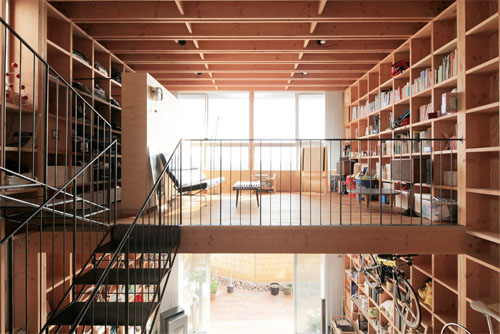
A new way of building houses, developed by Japanese architect Kiyoshi Kasai, uses no pillars, contains lots of built-in storage and is seismically resistant. ‘Wooden Box 212’ solves two big problems in designing houses for Japan: tiny lots, and the constant risk of damaging earthquakes. This design uses wood almost exclusively, but enables large spaces free of columns and partitions.

Wooden Box Home Design 2

Dense trusses clad with wood make up sturdy, seismic-resistant shear walls along the sides of the building, so the front and rear can be designed as desired with lots of glass for natural light and whatever architectural details the homeowner desires.

Wooden Box Home Design 3

The trusses are ganged together in a series and clad with structural plywood so that lateral motion is spread along many components, which are able to maintain their integrity. The entire structure can be made from 2×12 lumber, including both columns and beams. Any cut-offs are used to create shelving, virtually eliminating waste.

Wooden Box Home Design 4

The result is a contemporary home with an open feel and tons of shelving and niches for decor and personal belongings.  See lots more photos at Core 77.