How Can Timber Help Combat Climate Change? Case Study Confirms Benefits

michael green

The immediate sustainability benefits of timber compared to steel and concrete, the two other widest-used building materials, are pretty obvious. Most people are already aware that wood is the only one of the three that’s renewable, and that it’s able to trap literal tons of carbon from the atmosphere, absorbing it for the duration of its lifetime so it doesn’t accumulate in the atmosphere. When it’s time for it to be replaced, wood can be reused in all sorts of creative ways, including reclamation as floorboards and furniture, before it is finally burned as fuel. And finally, timber requires far less energy in its extraction and recycling processes than steel and concrete. But for a long time, strict limits on the height of wooden buildings has kept timber from meeting its full potential.

That could all change very soon as wooden skyscrapers get green lights around the world, and studies are enacted to confirm even more benefits to using timber as a primary building material. One example is a recent life-cycle analysis on how timber can help combat climate change through the construction of compact wooden cities sourced from well-managed sustainable forests. Forest management in the European Union is leading the way to show it’s possible to produce more forest than what’s being harvested, and an integrated modern operation using today’s advanced timber technology can ensure that the benefits of carbon absorption outweigh any hazards of over-harvesting.

fujimoto

An article by Eduardo Wiegand on ArchDaily goes into the details, explaining how incentivizing the use of timber in construction could catch on and lead to a sustainable architecture revolution of sorts. “It is a fact that dense cities are significantly more sustainable than sprawling cities; therefore one path to more sustainable forms of living might be the planning and regulation of compact wooden cities,” says Wiegand.

“…the challenges of global warming and emissions of CO2 could be solved partially though the densification of cities using timber as the primary material of construction. In order to achieve this, structural systems and timber-based products must continue to develop, and the forestry industry should be prepared to respond to a higher demand for wood in the future, which can be achieved by increasing the productivity and efficiency of the extraction of this renewable resource.”

Read more at ArchDaily.

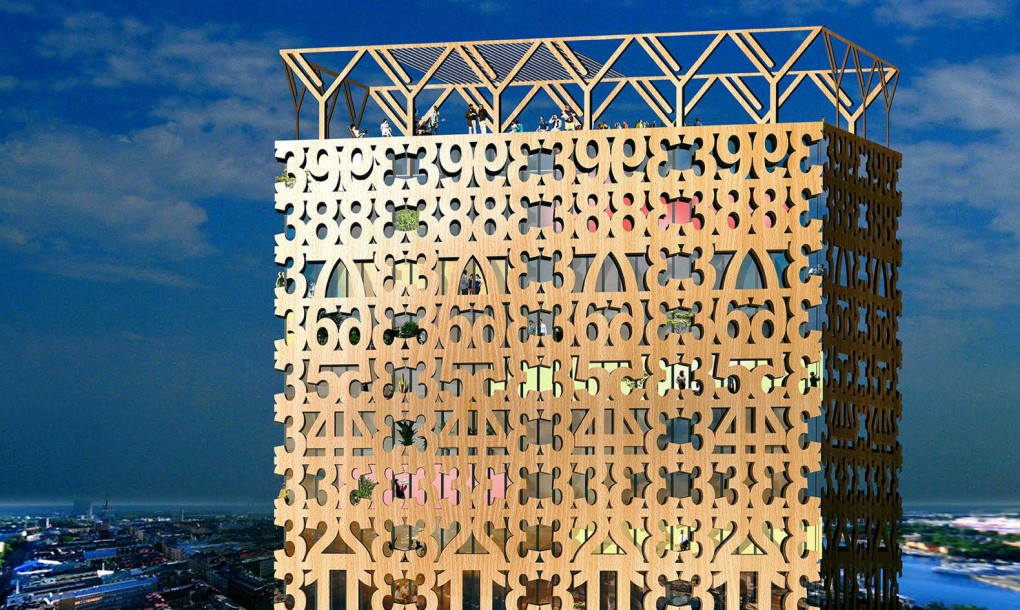
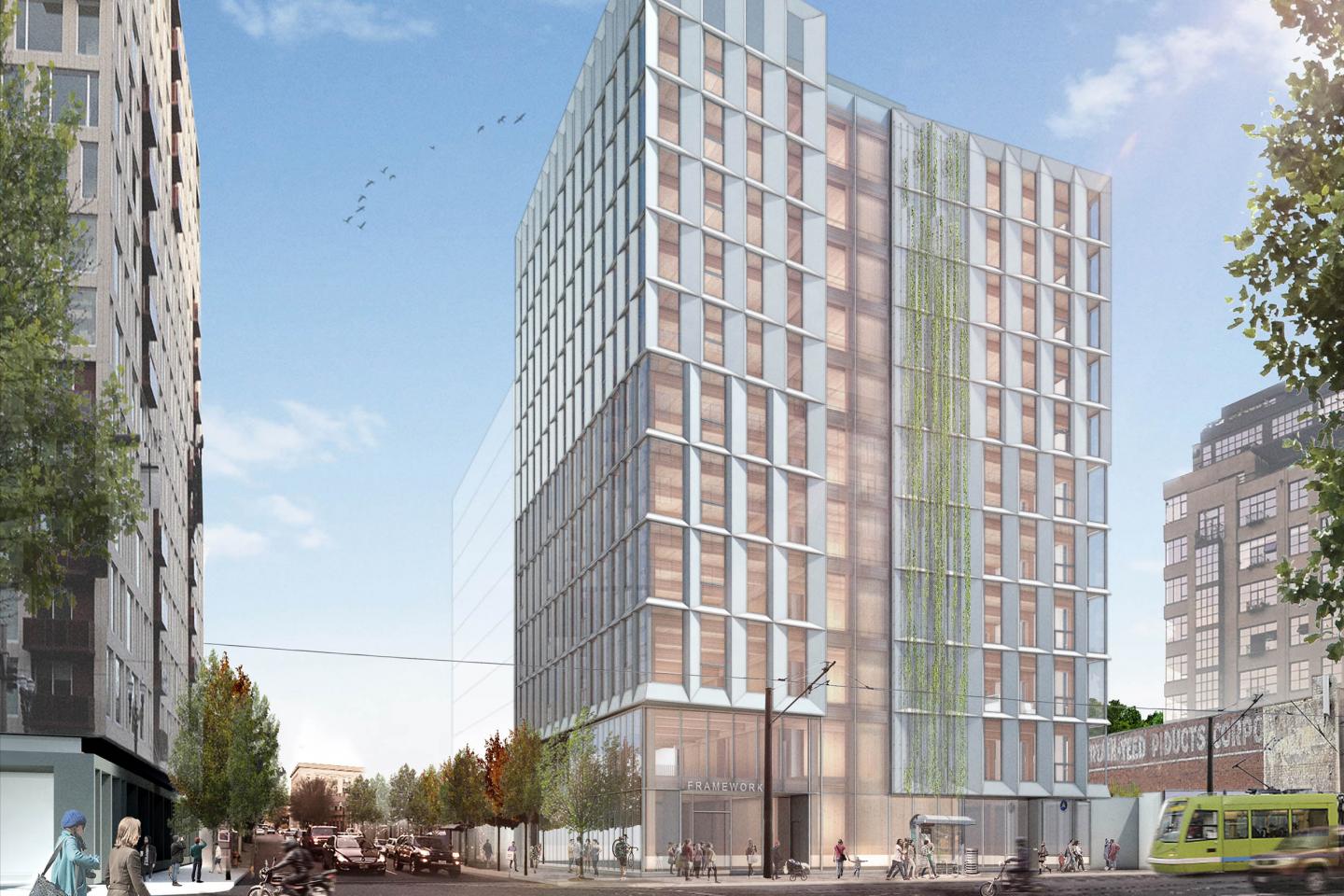
Pictured: Michael Green Architecture’s entry to the Reinvented Paris Competition and Sou Fujimoto + Laisne Roussel’s proposal for a tall wooden building in Bordeaux

Transparent Wood: What Can’t This Material Do?

transparent wood

You read that right: there is now a way to make wood transparent, making this timeless natural material even more versatile than it already is and opening up virtually limitless architectural and design capabilities for the future. Though it’s a long way from being commercially available, ‘invisible wood’ is in fact a reality now that scientists at University of Maryland, College Park have developed a special chemical process to remove the lignin that gives wood its color.

Not only is this processed wood as clear as glass, it’s sturdier than traditional wood, too, and could be used in place of less environmentally friendly materials in applications where unbreakable glass is needed. According to Dr. Lianging Bhu of the University’s Department of Material Science and Engineering, the key is chemically removing the lignin and then injecting the empty veins of the wood with epoxy to make it strong and durable. Similar to the cellular structure of bone, the tiny channels that naturally occur in wood are responsible for its strong yet flexible qualities.

Glass has poor thermal isolation, making it a weak point for temperature regulation in most sustainably-designed structures. Since wood is a natural insulator, it could make a dramatic difference in keeping buildings protected from extreme hot and cold.

“Potentially, the wood could be made to match or even exceed the strength of steel per weight, with the added benefit that wood could be lighter in weight,” says Hu. “It’s exciting. And because the material has been used for a long time, there’s already a lot of know-how and manufacturing infrastructure in the wood industry so the field will develop very quickly.”

This breakthrough comes on the heels of a major renaissance of large-scale wooden architecture picking up speed around the world, as government officials approve building projects on wooden skyscrapers towering higher than ever. All of these advancements point to a looming resurgence in demand for wood, boosting the industry on virtually all levels.

Weirdest Wooden Skyscraper? Design for London Features Numerical Facade

wooden skyscraper 1

The wooden skyscraper trend is really taking off in 2016, with dozens of projects in various stages of planning, and many more concepts and proposals released by designers on a near-weekly basis. But none have been quite as creative and decorative as this one from Anders Berenson Architects, envisioned for Stockholm, Sweden. The Trätoppen Tower will be built almost entirely from cross-laminated timber (CLT) and features a numerical facade identifying each of its 40 stories in bold fashion for an effect that’s as ornate as any decorative screen.

wooden skyscraper 2

Set to be the tallest building in the city center, the tower is named after the Swedish word for ‘treetop,’ and will perch atop an existing parking garage by architect Hans Asplund. Two levels of the extension will be open to the public as terraces, and the rest will serve as private residences. The seven-story car park will be renovated to contain shopping areas, restaurants and cafes.

owden oskyscraper 5 wooden skyscraper 4

While it’s beautiful, the wooden screen doesn’t just serve a decorative purpose. It’s designed to reduce solar gain, helping to keep the interior cool and comfortable.

wooden skyscraper 7 wooden skyscraper 8

“If we want to reduce the amount of cars in the city center of Stockholm and at the same time make space for more housing without building on green areas, then replacing car parks with housing, shops and restaurants feels obvious,” say the architects.

Forest Facts: Sustainably Forestry Benefits in Infographic Form

forest

Sustainable forestry pays off, not just in slowing climate change and restoring ecosystems, but by creating jobs and wealth around the world. 1.3 billion people depend on forests for employment, financial benefits and the wood products they produce, and forested watersheds and wetlands supply a whopping 75% of the world’s accessible freshwater while acting as natural air filters. These two infographics from the World Bank sum up these and other benefits to sustainable, responsible forest management, explaining why it’s so crucial.

forestry infographic 1

For example, did you know that carbon emissions from land clearing outweigh those of the entire global transport sector? Sustainable forestry gives landowners a strong financial incentive to continuously replant their land and practice other techniques that maintain vital tracts of wooded land that might otherwise be sold and cleared for development.

sustainable forestry infographic 2

Standing forests absorb greenhouse gases and also build more resilient landscapes by regulating water flow, improving soil, protecting coastal communities from extreme weather events and providing migratory corridors for plant and animal species. GreenBiz.com has a rundown on how sustainable forestry can be a crucial part of a billion-dollar carbon removal industry.

Top photo: Wikimedia Commons

Wooden Buildings Fight Climate Change by Sequestering Carbon

lever architecture

Not only is wood a naturally sustainable, renewable material – it can actually help the fight against climate change by sequestering carbon dioxide, while concrete manufacturing pumps the potent greenhouse gas into the atmosphere. A 2014 study published in the Journal of Sustainable Forestry confirmed that switching to wood construction is a boon for the environment in several different ways, stressing that sustainable forest management creates jobs and reduces the risk of forest fires, too. And as a matter of fact, increasing wood harvests could actually lead to greater benefits.

“The 3.4 billion cubic meters of wood harvested each year accounts for only 20% of new annual growth,” reads the study. “Increasing the wood harvest to 34% or more would have several profound and positive effects. Emissions amounting to 14-31% of global CO2 would be avoided by creating less steel and concrete, and by storing CO2 in the cell structure of wood products. A further 12-19% of annual global fossil fuel consumption would be saved, including savings from burning scrap wood and unsellable materials for energy.”

The study was undertaken by scientists from the Yale School of Forestry & Environmental Studies and the University of Washington’s College of the Environment. The results make it clear that using wood to build large-scale architectural and infrastructure projects, from skyscrapers to bridges, is an essential step to sustainably meeting demand for new construction as economic development surges, especially in places like Asia, Africa and South America.

Meanwhile, new construction techniques are making wood even stronger and more versatile, especially cross-laminated timber, which is at the center of all the new record-breaking multi-story wood buildings that are currently being built or planned around the world. While most of that development is happening in Europe, Portland, Oregon is currently the center of wood construction innovation in the United States, according to Newsweek. The tallest wood-framed buildings in the country are currently in progress there as local timber product manufacturers make CLT from regionally produced wood.

Top image: A new 12-story mixed-use wooden building planed for Portland, Oregon by Lever Architecture.

Wooden Version of the Empire State Building Proves the Possibilities of Wood

wooden empire state building

Dubbing it “the symbol of a new age,” Metsä Wood has teamed up with architect Michael Green to design a sustainable wood version of the Empire State Building, showing off the virtually limitless heights to which wood construction may reach. The Finnish wood products producer presents ‘Plan B’, a series reimagining architectural wonders of the world to show how they could be built from wood instead of their original materials.

wooden empire state building 2

“While many things have changed in 85 years, architects still strive to give form to new ideas about structure, energy consumption, climate change and the list goes on,” says architect Michael Green. “For these reasons the most iconic building of the modern age – the Empire State Building – was chosen for Plan B case. We designed a skyscraper using Metsä Wood’s Kerto LVL engineered wood as the main material from floors to column spacing.”

wood empire state building 3

The first Plan B project reimagined the Colosseum in Rome, and the third will give the German parliament building known as the Reichstag a timber makeover.

wood colosseum wood colosseum 2

“Wood construction is the ideal way to both battle climate change and house a growing urban population,” says Metsä Wood’s Andreas Rutschmann. “As a large part of the German Parliament’s work is about environmental legislation, it really makes sense that its home is as sustainable as possible. It was great to hear that Plan B will be presented to the parliament’s department of Energy policy.”